
Finding Calm in Everyday Moments: A Nurse’s Perspective on Essential Oils and Stress

A personal message from Sheila Tucker, RN
During my years as a nurse, I have seen stress appear in many forms. Sometimes it is visible in a worried expression, tense shoulders, restless hands, or a voice that sounds more hurried than usual. At other times, stress is carried quietly by someone who continues caring for a family, meeting deadlines, making difficult decisions, and showing up for others while feeling completely depleted inside.
Those experiences have taught me that stress is not a sign of weakness. It is a human response to demands, uncertainty, change, loss, responsibility, and the many situations we cannot control. They have also taught me that small moments of care matter. A quiet pause, a supportive conversation, a walk outdoors, an earlier bedtime, or a familiar aroma may not remove the source of stress, but each can help create space to respond more intentionally.
As a registered nurse and doTERRA Wellness Advocate, I approach essential oils as companions to healthy stress-management habits. I do not view them as treatments for anxiety, depression, trauma, or other medical conditions. Instead, I use aroma to help shape an environment, mark a transition, and remind myself to pause.
Understanding the Stress Response
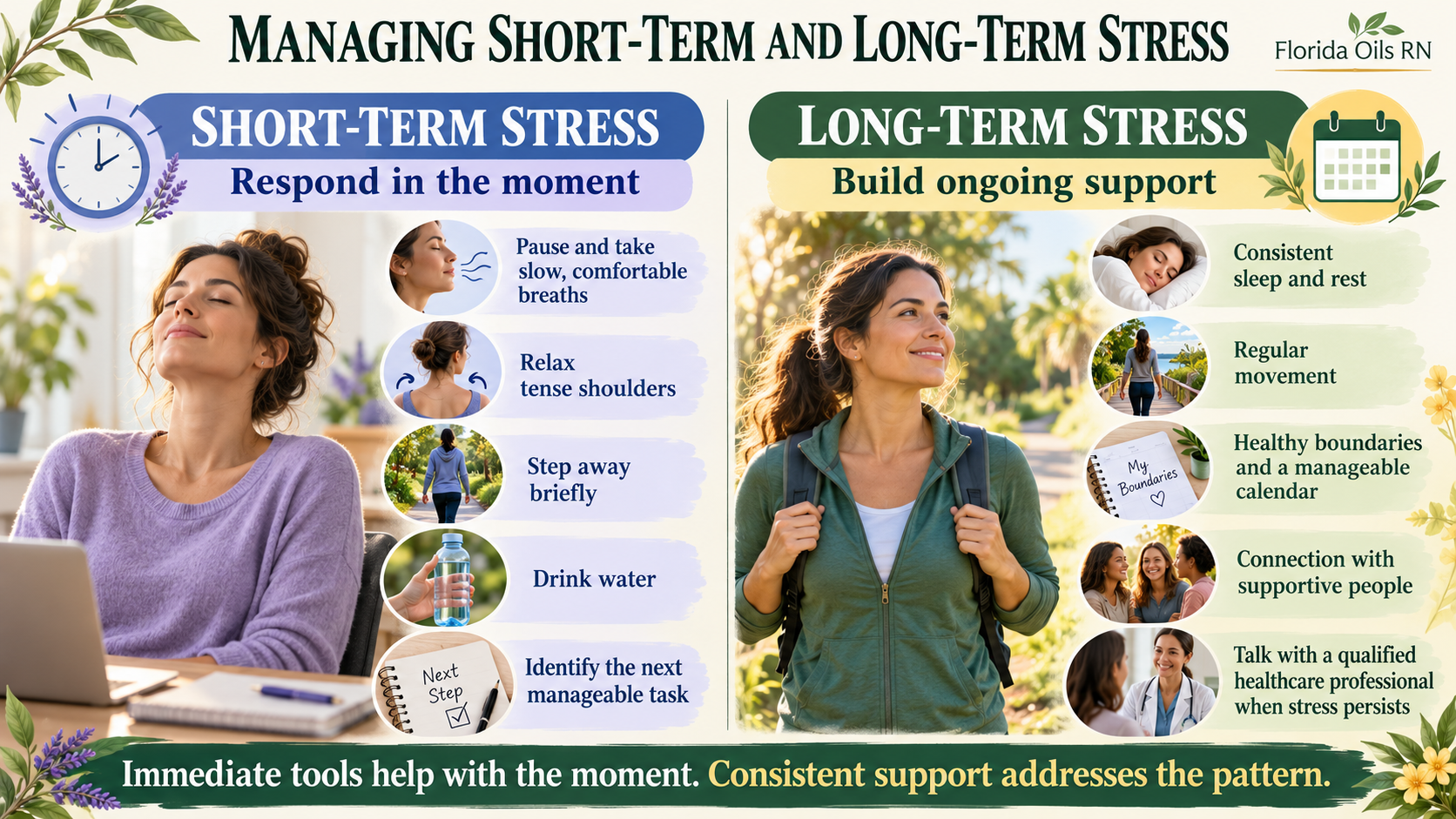
Stress prepares the body to respond to a perceived challenge. Muscles may tighten, breathing may become quicker, thoughts may race, and the heart may beat faster. In short periods, this response can help us act, solve problems, or move away from danger. When stress continues without enough recovery, however, it can affect sleep, concentration, digestion, mood, relationships, and overall well-being.
The American Psychological Association recommends approaching stress through a combination of healthy practices, including regular movement, adequate sleep, supportive relationships, nutritious food, time outdoors, and professional assistance when stress becomes difficult to manage.
Essential oils belong within that larger picture. An aroma cannot complete an overwhelming task, resolve a conflict, change a financial problem, or replace mental-health care. It can, however, become part of a brief sensory ritual that reminds us to slow down and choose the next helpful action.
Why Aroma Can Feel Meaningful
The sense of smell is closely connected to areas of the brain involved in emotion and memory. This helps explain why one aroma may remind us of a peaceful place, a loved one, a familiar season, or a comforting routine.

Aromatherapy research has produced some encouraging findings, but results are not consistent. The National Center for Complementary and Integrative Health notes that lemon aroma improved mood in one study involving people under stress, although neither lemon nor lavender changed the biological stress indicators measured in that research. That distinction is important: enjoying an aroma or noticing a change in mood does not necessarily mean the body’s underlying stress response has been medically treated.
For me, aroma works best as a cue. When I smell a blend that I regularly pair with quiet breathing or reflection, it reminds me to loosen my shoulders, unclench my jaw, and consider what I need in that moment.
doTERRA Adaptiv® for Demanding Moments
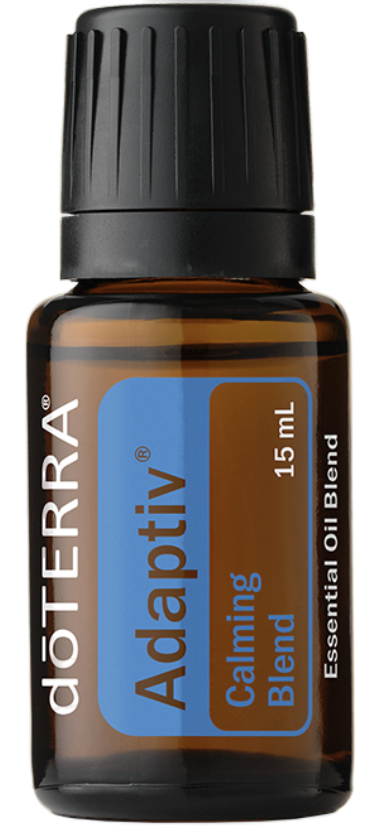
doTERRA Adaptiv Calming Blend is one of the products I associate most closely with stressful transitions. It combines Lavender, Copaiba, Rosemary, Magnolia, Neroli, Sweetgum, Wild Orange, and Spearmint essential oils. The softer floral and woody notes create a soothing aromatic foundation, while Wild Orange and Spearmint contribute a brighter quality. doTERRA describes the blend as creating a soothing, relaxing, and uplifting atmosphere.
I might diffuse Adaptiv before beginning a demanding project or while preparing for a busy day. The aroma does not make the responsibilities disappear. Instead, it helps establish a short transition between feeling overwhelmed and deciding where to begin.
A useful reset might include turning on the diffuser, sitting comfortably, taking a few natural breaths, and writing down the next manageable task. The essential oil supports the setting; the pause, reflection, and practical action complete the routine.
doTERRA Balance® for Grounding
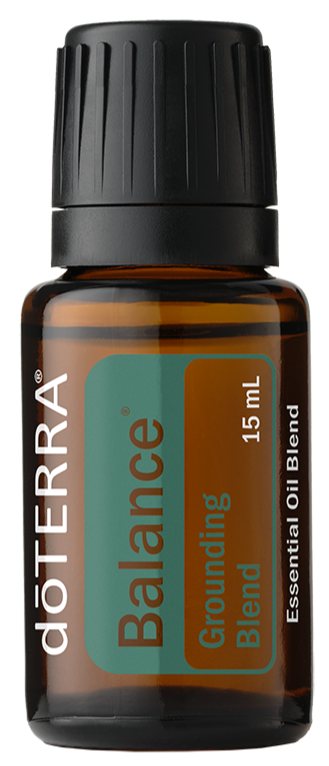
doTERRA Balance Grounding Blend has a warm, woody aroma. It contains Black Spruce, Ho Wood, Frankincense, Blue Tansy, Blue Chamomile, and Osmanthus in a base of Fractionated Coconut Oil. doTERRA describes Balance as helping create a calming, quieting environment.
I find grounding aromas especially appropriate when my thoughts are moving in several directions. Balance can accompany a morning intention, a reflective break, meditation, prayer, gentle stretching, or the transition from work responsibilities to home life.
A grounding ritual is not about ignoring a problem. It is about becoming present enough to respond thoughtfully rather than reacting automatically.
Lavender for a Peaceful Environment
Lavender is one of the most familiar essential oils used in relaxation routines. doTERRA Lavender has a soft floral aroma that can be diffused or incorporated into an evening routine according to its product directions. doTERRA describes it as offering a soothing aroma and promoting a peaceful environment.

I often think of Lavender as an invitation to reduce stimulation. Its aroma can accompany dimmer lights, a quieter room, journaling, reading, or preparing for sleep.
Research involving lavender and emotional well-being remains mixed and has important limitations, including small study sizes and differences in methods. Lavender should therefore be presented as an aromatic wellness option rather than a proven treatment for anxiety or chronic stress.
doTERRA Serenity® for Evening Transitions
Stress frequently follows us into the evening. The body may be tired, but the mind continues reviewing conversations, unfinished tasks, and tomorrow’s obligations.
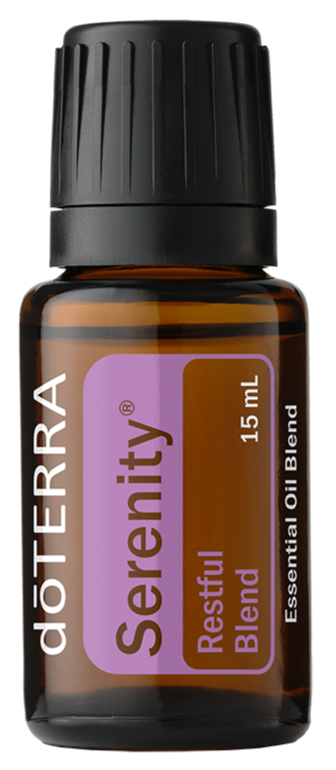
doTERRA Serenity Restful Blend combines Lavender, Cedarwood, Coriander, Ylang Ylang, Marjoram, Roman Chamomile, Vetiver, and Sandalwood, with Tonka Bean and Vanilla Absolute. doTERRA describes its aroma as soothing and grounding and recommends it for creating a calming, tranquil atmosphere.
I see Serenity as a useful marker between daytime activity and nighttime rest. Diffusing it while following a consistent bedtime routine can help create a recognizable signal that the active part of the day is ending. That routine might also include putting away electronic devices, lowering the lights, preparing clothes for the morning, or writing down lingering concerns.
doTERRA Peace® and the Pressure to Be Perfect
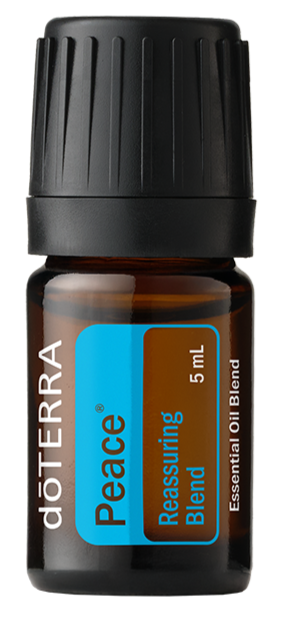
Some stress grows from the belief that everything must be handled perfectly. doTERRA Peace Reassuring Blend offers a gentle combination of floral and mint aromas. Its message is especially meaningful: we do not have to be perfect to experience a peaceful moment.
Peace can accompany reflection, affirmations, or a quiet pause before a difficult conversation. I appreciate using an aroma like this as a reminder that calm does not require every problem to be solved first. Sometimes calm begins with accepting the present moment and choosing one reasonable next step.
Building a Simple Aromatic Reset
An essential-oil stress routine does not need to be complicated. I suggest choosing one aroma and connecting it with one constructive habit. Adaptiv might accompany planning. Balance might accompany grounding. Lavender or Serenity might signal an evening transition. Peace might accompany reflection or self-compassion.
Begin with the lowest practical aromatic amount, maintain ventilation, and follow the product label. When using an oil topically, follow its dilution and skin-sensitivity directions. Keep essential oils away from the eyes and other sensitive areas, and store them securely around children and pets.
Stop using an aroma if it causes coughing, headache, nausea, skin irritation, breathing discomfort, or another unwanted response. Aroma preferences are personal, and an oil that feels comforting to one person may be unpleasant or irritating to someone else.
Knowing When More Support Is Needed
Essential oils are not substitutes for counseling, prescribed medication, emergency assistance, or evaluation by a qualified healthcare professional. Persistent sadness, panic, worsening anxiety, inability to manage daily responsibilities, major sleep disruption, substance misuse, or thoughts of self-harm require appropriate professional support.
My nursing experience has taught me that asking for help is not a failure. It is an informed and courageous wellness decision.
For me, essential oils provide small invitations throughout the day: pause, notice, breathe comfortably, reflect, and move forward with greater intention. doTERRA Adaptiv, Balance, Lavender, Serenity, and Peace can help create aromatic environments that feel calming, grounding, or reassuring. Their most responsible role is to complement—not replace—the habits, relationships, and professional resources that support lasting well-being.
All my best,
Sheila Tucker, RN
Registered Nurse and doTERRA Wellness Advocate
This article is for general educational purposes only. It does not diagnose, treat, cure, or prevent any medical or mental-health condition and is not a substitute for individualized professional care.