
Essential Oils: How They Impact the Brain and Nervous System
A personal message from Sheila Tucker, RN
Some of my favorite moments with essential oils are also the simplest. I might diffuse Lavender while preparing for bed, apply doTERRA Balance before beginning a busy day, or pause to breathe in an uplifting citrus aroma when my thoughts feel scattered. These routines do not remove life’s demands, but they encourage me to slow down, breathe intentionally, and become more aware of how I am feeling.
As a registered nurse and wellness advocate, I appreciate the importance of understanding both the possibilities and limitations of essential oils. They are not treatments for neurological or mental-health conditions, and they do not replace sleep, movement, nourishing food, supportive relationships, stress-management practices, or professional healthcare. However, aroma can be a meaningful part of a personal wellness routine because the sense of smell is closely connected with areas of the brain involved in emotion, memory, attention, and behavior.
How Aroma Communicates with the Brain
When we inhale an aroma, airborne molecules reach specialized receptors in the upper part of the nasal cavity. Those receptors send information to the olfactory bulb, where the brain begins identifying and interpreting the scent.
The olfactory system has close anatomical connections with the limbic system and cerebral cortex. These brain regions participate in emotion, memory, learning, and behavior. This helps explain why a familiar aroma can bring back a vivid memory or quickly influence how an environment feels (Branigan & Tadi, 2023).
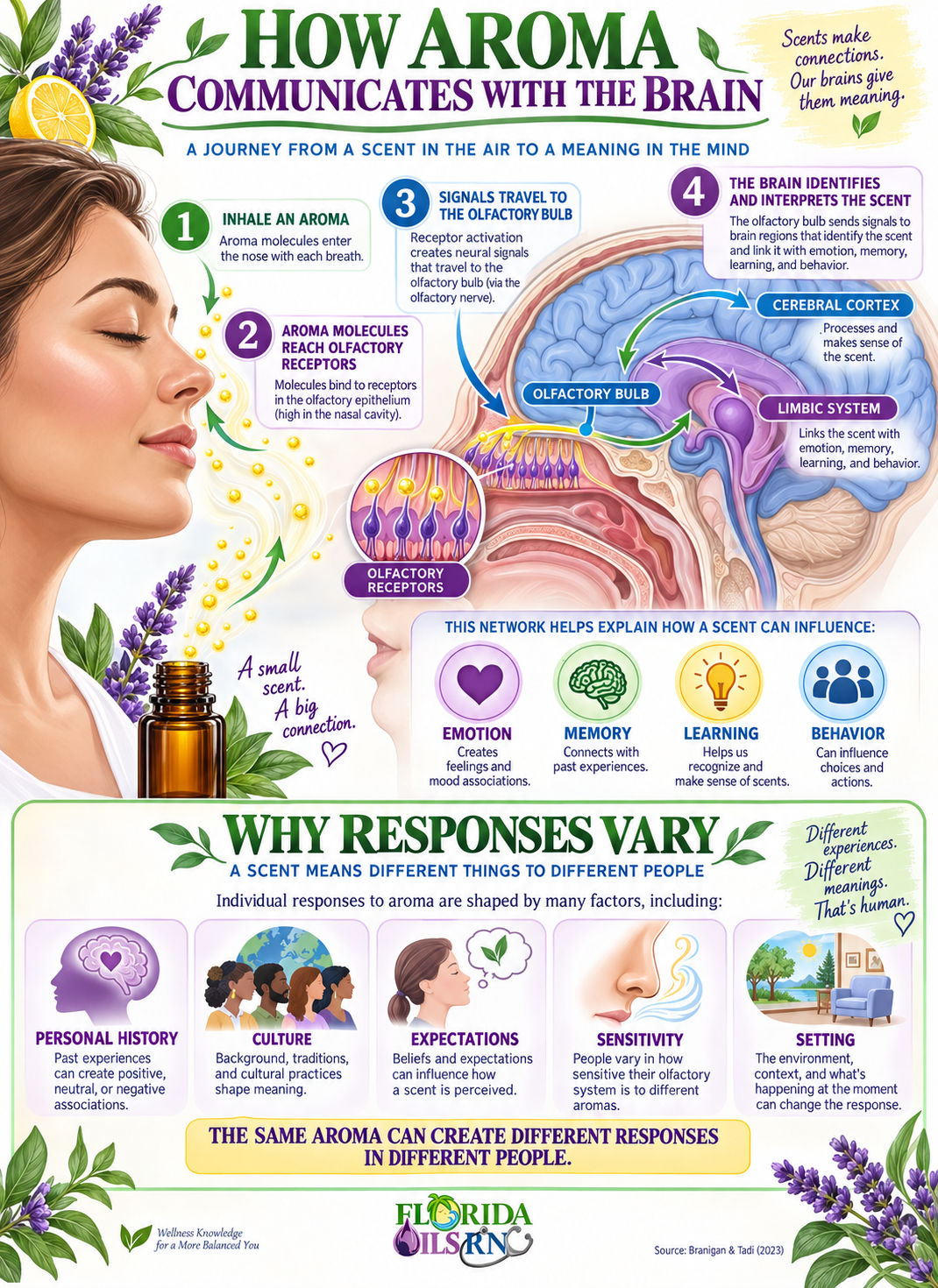
Our responses to aroma are not identical. A fragrance that one person associates with comfort may remind someone else of an unpleasant experience. Personal history, culture, expectations, sensitivity, and the setting in which an aroma is experienced can all influence the response. Therefore, essential oils should not be expected to create one universal emotional or neurological effect.
The Nervous System’s Changing States
The autonomic nervous system helps regulate functions that occur largely without conscious effort, including heart rate, breathing, digestion, and the body’s response to stress. Its sympathetic division helps the body become alert and ready for action. Its parasympathetic division supports quieter processes associated with resting and recovering.
Neither state is inherently bad. We need alertness when responding to a challenge, driving, exercising, or completing a demanding task. We also need opportunities to settle after the challenge has passed. Wellness depends partly on the body’s ability to move appropriately between activation and rest.
Some research suggests that pleasant aromas may influence autonomic activity, emotional state, or perceived stress. One study involving adolescents found changes in heart-rate variability after aromatherapy exposure, suggesting a possible relationship between aroma and autonomic regulation (Lin et al., 2021). However, aromatherapy research varies considerably in the oils, concentrations, methods, populations, and outcomes studied. Results should therefore be interpreted as promising rather than conclusive.
Lavender and Evening Routines
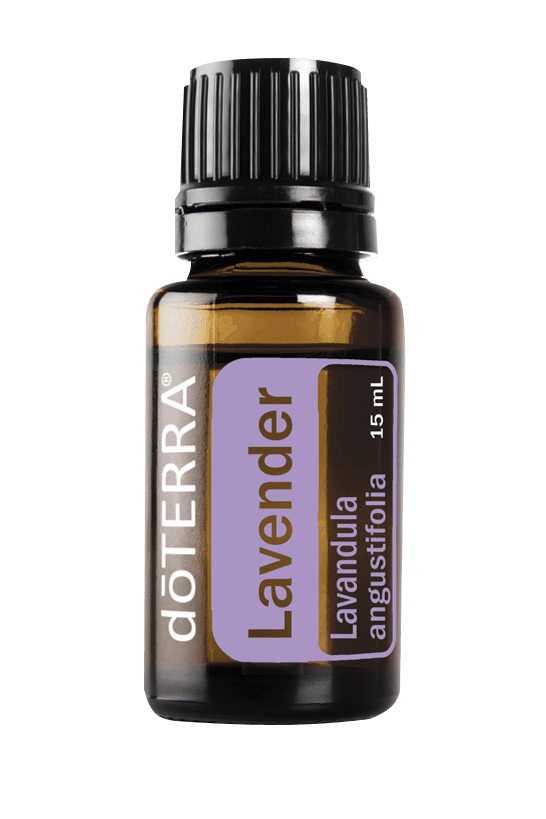
Lavender is one of the most extensively studied essential oils. Its familiar floral aroma is frequently associated with calm surroundings and bedtime routines. Reviews of inhaled essential oils have found that many studies report improvements in sleep-related outcomes, with Lavender appearing more often than any other oil. Researchers also note limitations in study quality and consistency (Lillehei & Halcon, 2014).
A more recent meta-analysis of 11 randomized controlled trials involving 628 adults found an overall improvement in sleep quality associated with Lavender essential oil. The authors cautioned that the limited quantity and quality of available studies restrict the certainty of the conclusion (Shen et al., 2025).
doTERRA Lavender can be used aromatically according to its product directions. Its aroma may complement a quiet evening ritual that includes dimmer lighting, reduced screen use, reading, journaling, or gentle breathing. The benefit of such a routine may come from several elements working together rather than from the essential oil alone.

doTERRA Balance and Grounding Moments
doTERRA Balance Grounding Blend has a warm, woody aroma created with Black Spruce, Ho Leaf, Frankincense, Blue Tansy, Blue Chamomile, and Osmanthus in a base of Fractionated Coconut Oil. doTERRA describes the blend as creating a calming, quieting environment.
I think of Balance as an aroma for transitions. It can become part of a morning routine, a quiet moment before a difficult conversation, or a pause between work and home responsibilities. Consistently pairing an aroma with slow breathing or reflection may eventually make the scent a familiar cue to stop and become more intentional.
This does not mean the oil changes an external situation. Rather, the ritual creates a brief space in which a person can notice tension, organize thoughts, and respond more deliberately.
Adaptiv and Everyday Change
Unexpected changes and demanding schedules can leave the mind feeling busy. doTERRA Adaptiv Calming Blend combines Lavender, Magnolia, Neroli, Wild Orange, Spearmint, Rosemary, and Copaiba essential oils. Its composition brings together softer floral and woody notes with brighter citrus and mint aromas. doTERRA presents it as an aromatic blend for creating a soothing, uplifting environment during stressful situations or periods of adjustment.
Adaptiv can be incorporated into a personal reset routine: pause, notice the aroma, breathe slowly, and identify the next manageable task. The oil does not complete the task or resolve the stressor. Its practical value is in supporting a consistent moment of mindfulness within the day.
Copaiba and Quieting Routines
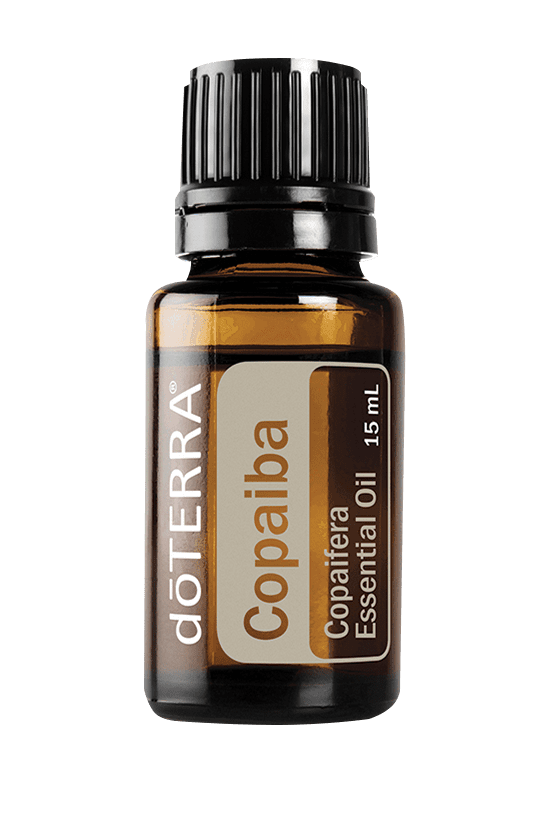
Copaiba essential oil is steam-distilled from the resin of Copaifera trees native to tropical South America. Its primary aromatic character is warm, woody, and softly resinous. doTERRA includes Copaiba in products such as Adaptiv and also offers it as a single essential oil.
Copaiba is sometimes discussed in relation to the nervous system because it contains high levels of beta-caryophyllene, or BCP. Laboratory research has examined how this constituent interacts with biological signaling pathways, but such findings should not be treated as proof that smelling Copaiba prevents or treats a nervous-system disorder. In an everyday wellness context, its aroma can simply be appreciated as part of a peaceful environment, meditation routine, or evening wind-down.
Peppermint, Citrus, and Alert Environments
Not every essential-oil routine is intended to feel quiet. Peppermint and citrus aromas are often chosen when someone wants an environment that feels fresh, bright, or energizing. Research reviews suggest inhaled aromas may influence areas such as arousal, attention, and memory, but results differ according to the oil, dose, testing method, and individual response (Malloggi et al., 2022).
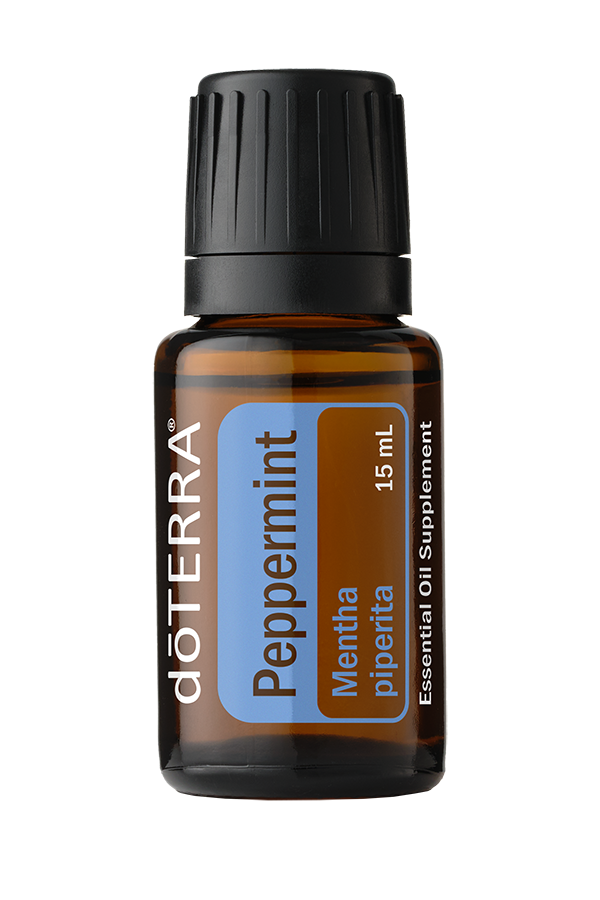
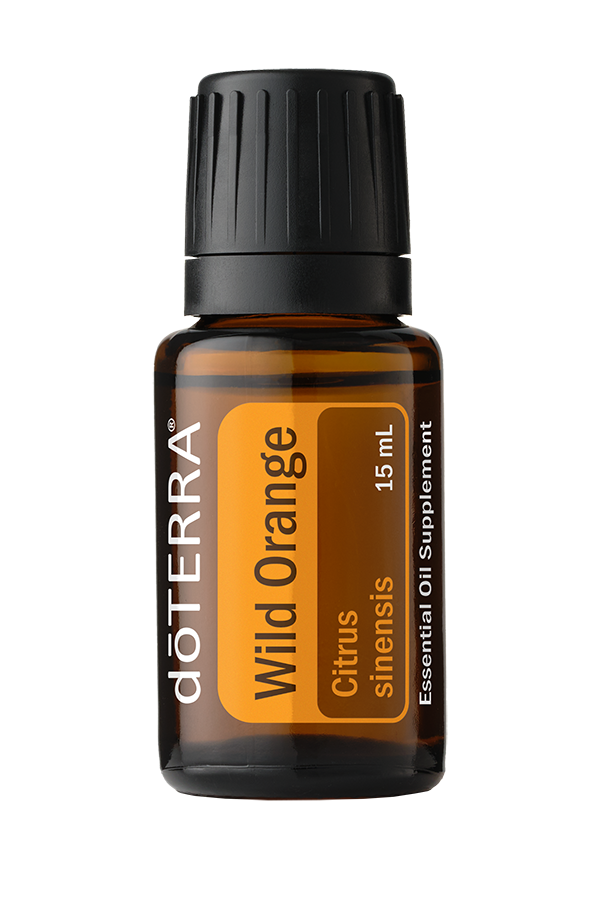
A drop of doTERRA Peppermint in a diffuser blend or a citrus aroma such as Wild Orange can become part of a morning routine, workspace, or afternoon transition. It is more accurate to say that these aromas may help create an alert-feeling atmosphere than to claim that they directly improve brain performance.

A Thoughtful Place for Essential Oils
The strongest role for essential oils may be as sensory companions to habits already known to support well-being. An aroma can accompany slow breathing, reflection, a consistent bedtime, a focused workspace, time outdoors, or a peaceful transition between activities.
Research examining essential oils and the nervous system reports encouraging findings involving stress, sleep, mood, fatigue, and cognitive experiences. For me, essential oils provide invitations: an invitation to pause, breathe, prepare, focus, or rest. Their aromas help me create an environment that supports the way I want to approach a particular part of my day. Used with realistic expectations, they can become meaningful elements of a broader wellness routine centered on self-awareness, healthy habits, and intentional living.
All my best,
Sheila Tucker, RN
References
Branigan, B., & Tadi, P. (2023). Physiology, olfactory. In StatPearls. StatPearls Publishing. https://www.ncbi.nlm.nih.gov/books/NBK542239/
doTERRA. (n.d.-a). Adaptiv system. https://www.doterra.com/US/en/p/adaptiv-system
doTERRA. (n.d.-b). doTERRA Balance essential oil. https://www.doterra.com/US/en/balance-grounding-blend-oil
doTERRA. (n.d.-c). Lavender essential oil. https://www.doterra.com/US/en/p/lavender-oil
doTERRA. (n.d.-d). Copaiba essential oil. https://www.doterra.com/US/en/p/copaiba-oil
Lillehei, A. S., & Halcon, L. L. (2014). A systematic review of the effect of inhaled essential oils on sleep. Journal of Alternative and Complementary Medicine, 20(6), 441–451. https://doi.org/10.1089/acm.2013.0311
Lin, P.-H., Lin, L.-T., Chen, Y.-W., Wu, C.-K., Chen, C.-L., & Yang, Y.-H. (2021). Effect of aromatherapy on autonomic nervous system regulation with treadmill exercise-induced stress among adolescents. PLOS ONE, 16(4), e0249795. https://doi.org/10.1371/journal.pone.0249795
Malloggi, E., Menicucci, D., Cesari, V., Frumento, S., Gemignani, A., & Bertoli, A. (2022). Lavender aromatherapy: A systematic review from essential oil quality and administration methods to cognitive enhancing effects. Applied Psychology: Health and Well-Being, 14(2), 663–690. https://doi.org/10.1111/aphw.12310
Shen, H., Zou, Z., & Huang, Y. (2025). The sleep-enhancing effect of lavender essential oil in adults: A systematic review and meta-analysis. Medicine, 104(25), e42821. https://doi.org/10.1097/MD.0000000000042821