Tea Tree Essential Oil for Wasp Stings, Bee Stings, and Insect Bites

While weeding, a friend unknowingly disturbed a ground nest of yellow jackets. When these determined defenders believe their nest is threatened, they respond quickly—and their tiny stings can be extremely painful. Soon after being stung, she applied some baking soda paste to soothe the burning sensation, followed by ice to help control the swelling. By the next day, however, her hand had become noticeably swollen.
At that point, she reached for Tea Tree essential oil spray. Though the swelling continued through the day and into the next, the redness appeared to decrease fairly quickly, and the tissue around the sting gradually began to feel softer and less irritated. For her, Tea Tree essential oil became a helpful addition to the basic first-aid measures she had already taken. A word of caution: anyone experiencing difficulty breathing, facial or throat swelling, widespread hives, dizziness, or rapidly worsening symptoms after a sting should seek emergency medical care immediately.
Our outdoor activities often come with an unwelcome consequence: insect bites and bee or wasp stings. Mosquitoes, gnats, ants, flies, bees, and wasps can leave behind redness, itching, tenderness, and localized swelling. For mild reactions, tea tree essential oil can be a useful addition to a natural skin-comfort routine because of its cleansing, soothing, and anti-inflammatory properties.

CLICK HERE to purchase Tea Tree at wholesale price.
Tea tree essential oil, also known as melaleuca oil, is distilled from the leaves of the Australian plant Melaleuca alternifolia. It has long been used in topical preparations for minor skin concerns. Modern research has identified antimicrobial and anti-inflammatory activity that may help explain its popularity in products designed for irritated skin.
How Tea Tree Oil May Help
An insect bite or sting activates the body’s inflammatory response. Histamine and other chemical messengers contribute to the familiar raised bump, redness, warmth, swelling, and itch.
Tea tree oil has been studied for its ability to moderate some of these inflammatory skin responses. In a controlled human experiment, topical tea tree oil significantly decreased the volume of histamine-induced wheals. A wheal is the raised, swollen area that commonly develops during an allergic-type skin response.
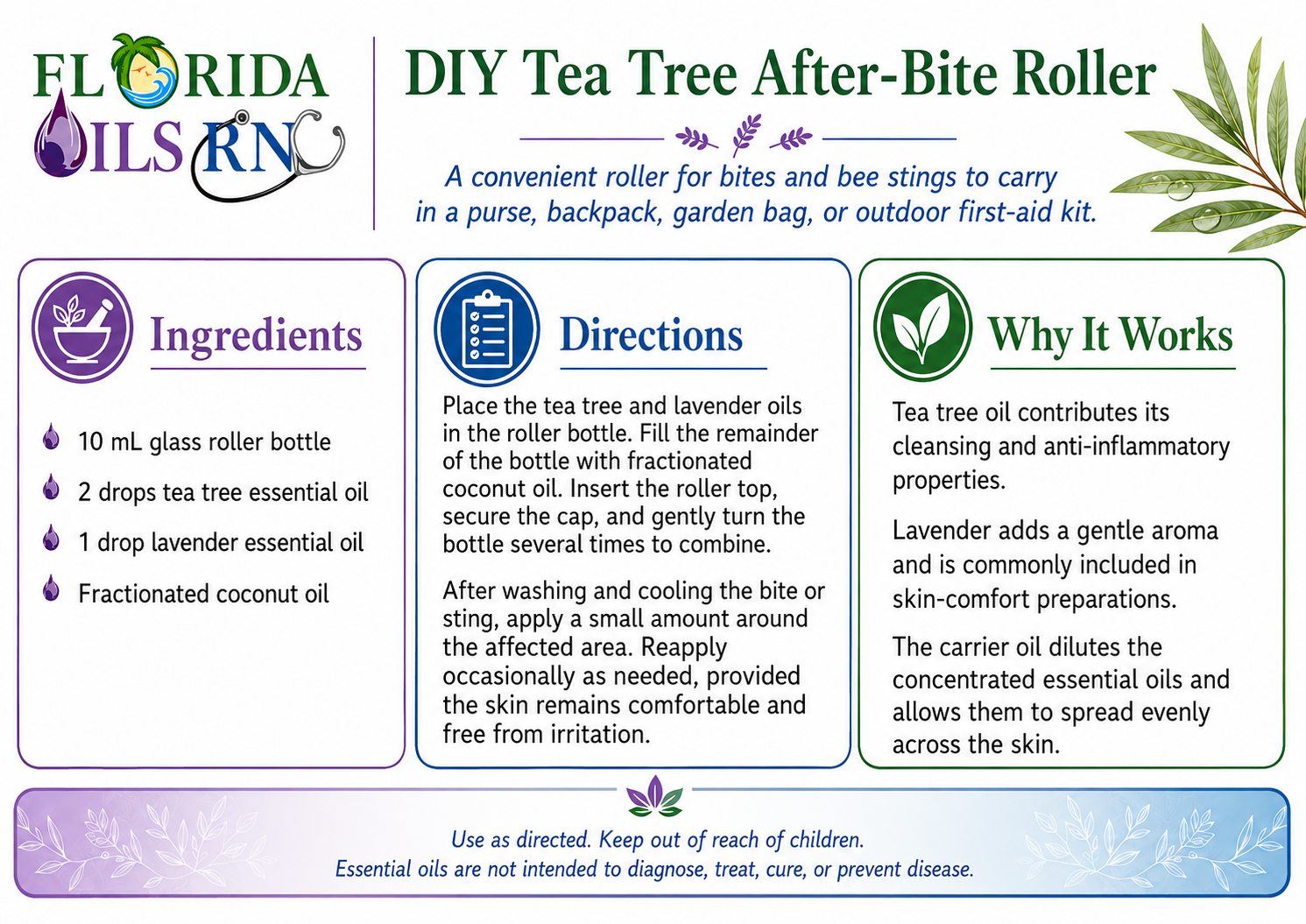
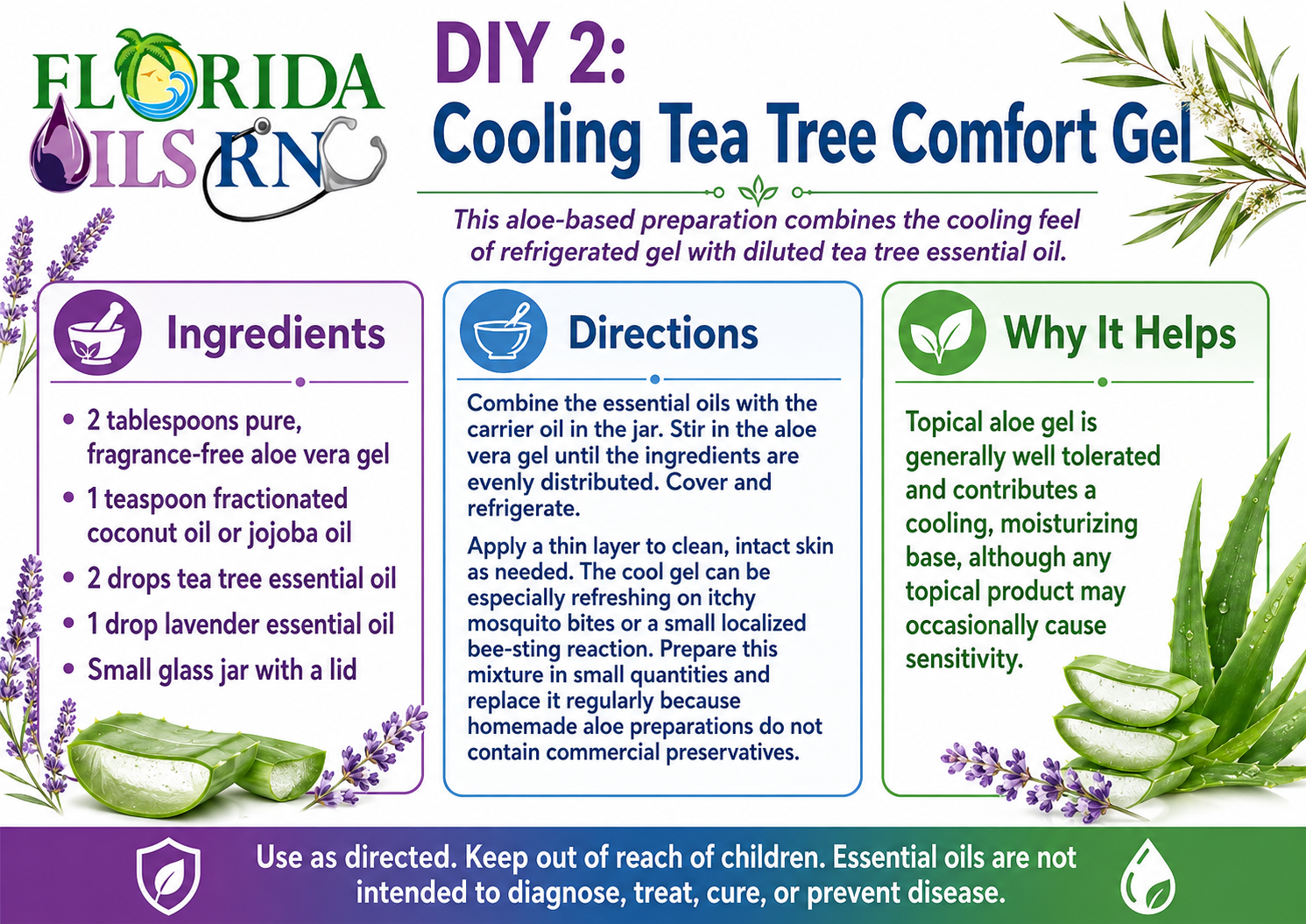
Diluted tea tree oil particularly helpful for mosquito bites, minor insect bites, and localized reactions after a bee or yellow jacket sting. As with my friend’s yellow jacket experience, tea tree oil may help calm the appearance and sensation of irritated skin while providing a clean, refreshing topical experience.
Using Tea Tree Oil After a Bee Sting
Before applying tea tree oil, address the sting itself. Move away from the area where the sting occurred and remove any visible bee stinger promptly. Yellow jackets swarm after the offender, however, so try to get inside and away from the attacking wasps as quickly as possible.
Wash the skin with soap and water, and apply a paste of baking soda and water. Then place a cloth-wrapped cold pack over the area to help control immediate swelling and discomfort.
Once the area is clean and the skin is intact, a diluted tea tree oil preparation may be applied. Tea tree oil should not be expected to neutralize bee or wasp venom, but its anti-inflammatory and skin-cleansing qualities may support comfort as the minor local reaction subsides.
Avoid scratching the area. Scratching can further irritate the skin and create small openings through which bacteria may enter.
Safe and Effective Topical Use
Essential oils are highly concentrated, so more is not necessarily better. Dilution allows tea tree oil to be used comfortably while reducing the possibility of irritation. Most adults tolerate diluted topical tea tree oil, but redness, dryness, burning, or sensitivity can occur in some people. Older or oxidized tea tree oil is more likely to irritate the skin, so keep the bottle tightly closed and store it away from light and heat.
Apply a small test amount before using a new preparation extensively. Do not use tea tree oil in the eyes, mouth, ears, or directly inside the nose. Avoid applying it to bleeding, blistered, or severely damaged skin, and never swallow tea tree essential oil.
When a Sting Requires Emergency Care
Tea tree oil is intended only for mild, localized skin reactions. Bee and wasp stings can sometimes trigger anaphylaxis, which is a rapidly developing medical emergency. Call 911 immediately for difficulty breathing, swelling of the tongue or throat, chest tightness, widespread hives, trouble swallowing, faintness, vomiting, or rapidly worsening symptoms. Use prescribed epinephrine immediately when available. Essential oils cannot stop anaphylaxis or replace emergency treatment.
Medical evaluation is also appropriate for multiple stings, a sting in the mouth or eye, spreading redness, drainage, fever, severe pain, or swelling that continues to increase.
For everyday mosquito bites and mild localized sting reactions, however, properly diluted tea tree essential oil offers a practical botanical option. Its demonstrated anti-inflammatory properties, cleansing qualities, and refreshing feel make it a valuable ingredient in a carefully prepared outdoor skin-comfort routine.