Why Choose doTERRA Essential Oils Instead of a Generic Brand?

A personal story from Sheila Tucker
Why I Chose doTERRA
For more than two decades as an emergency and critical care nurse, I learned one lesson over and over again:
Quality matters.
In medicine, we don’t assume a medication is pure because the label says it is. We rely on testing, traceability, manufacturing standards, and consistency from one batch to the next because people’s health depends on it. When I began studying essential oils, I approached them with that same mindset. I wasn’t looking for the cheapest bottle. I wasn’t looking for the prettiest label. I was looking for a company that could answer my questions.
Where was this plant grown? Who distilled it? How was it tested? Can I verify this batch?
That search is what eventually led me to doTERRA. Their commitment to third-party laboratory testing, batch-specific quality control, direct relationships with growers, and transparency gave me confidence that I knew what I was putting on my family and recommending to others.
After years in healthcare, I have learned that trust is built through consistency, transparency, and evidence—not marketing. Those same principles guide the choices I make for my own family. Whatever brand you choose, ask questions. Learn where the plants were grown. Understand how the oils were tested. Read the label carefully. Know what you’re purchasing. For me, doTERRA has consistently provided the transparency and quality standards I was looking for, and that is why I continue to choose them.
For me, this has never been about hype. It’s about integrity.
Feel free to contact me anytime for questions about doTERRA and essential oils.
All my best,
Sheila
When purchasing essential oils, the bottle’s price and fragrance are only part of the story. The identity of the plant, its growing conditions, the time of harvest, the distillation process, storage practices, and laboratory testing can all affect the oil inside the bottle. Choosing doTERRA provides greater transparency about these factors and gives consumers a consistent quality-control system, product-specific instructions, and educational support. The following frequently asked questions explain why these distinctions matter.
Aren’t all essential oils basically the same?
No. Two bottles labeled “lavender,” “peppermint,” or “lemon” may differ substantially. Plant species, geographic origin, climate, soil, harvest timing, distillation, storage, and possible adulteration can influence an oil’s chemical composition and aroma.
A lower-priced oil could be authentic and well made, but a label saying “pure” or “natural” does not, by itself, provide enough information to verify its contents. Some suppliers offer detailed sourcing information and independent laboratory reports, while others provide little more than a common plant name. The important comparison is therefore not simply doTERRA versus every other company. It is a documented, traceable product versus one whose identity, purity, and handling cannot be readily verified. Purity without consistency is difficult to trust. If one bottle smells different, performs differently, or has a different chemical profile than the previous bottle, it’s difficult to know what you’re actually using. Consistent sourcing, harvesting, distillation, and testing help provide confidence that each batch meets the same quality standards.
What makes doTERRA different from an unknown or generic brand?
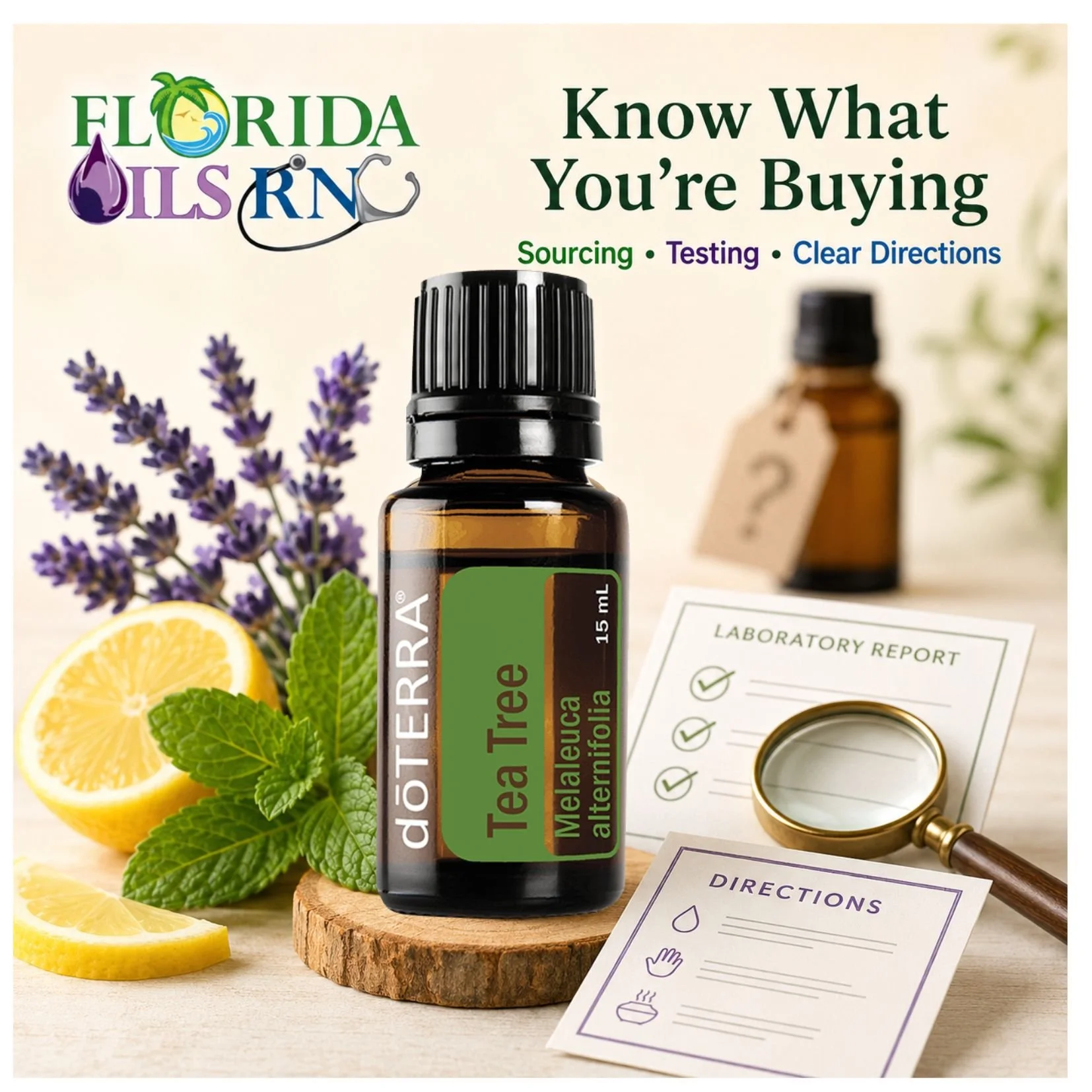
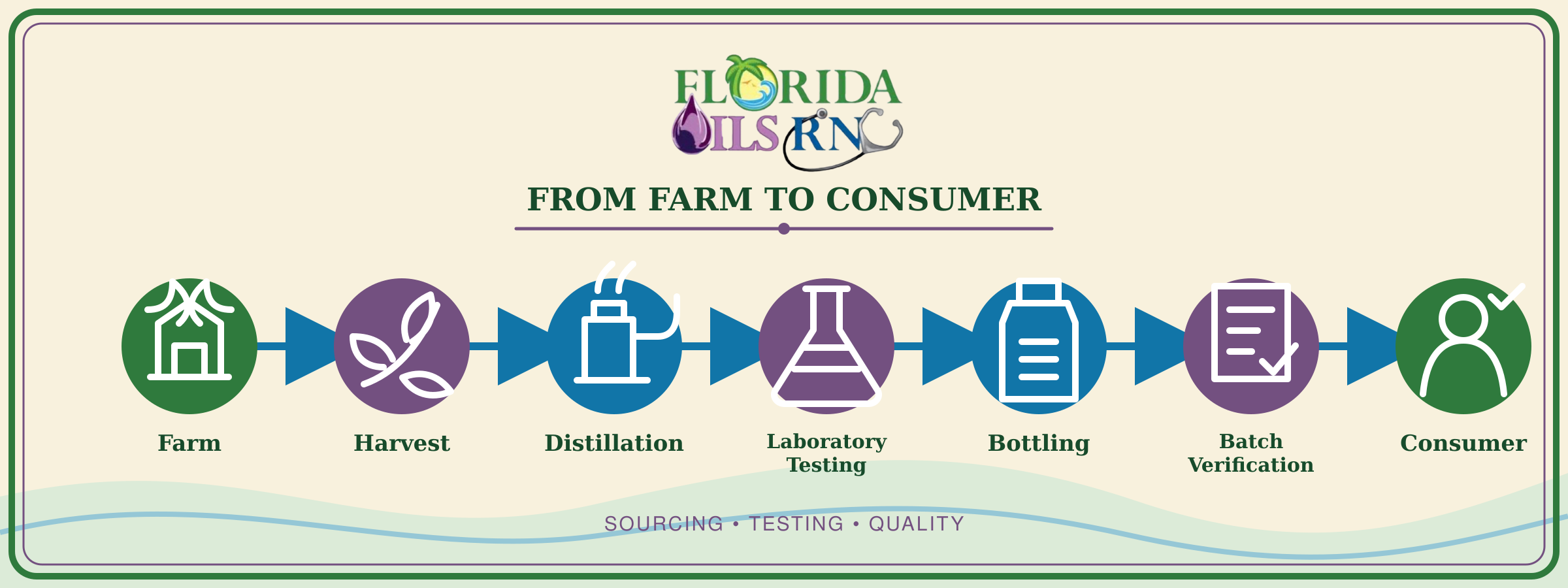
doTERRA has established a defined system covering sourcing, testing, manufacturing, labeling, and consumer education. Instead of relying solely on fragrance or appearance, the company evaluates oils using several analytical methods designed to confirm botanical identity and detect contamination or adulteration.
This structure gives consumers more information about what they are purchasing. A generic oil sold by an unfamiliar manufacturer may not necessarily be poor quality, but without accessible testing, sourcing details, and clear directions, the consumer has fewer ways to evaluate it. Choosing doTERRA reduces that uncertainty by connecting each product to a recognizable company and an established quality process.
What does CPTG mean?
CPTG stands for Certified Pure Tested Grade®. It is doTERRA’s proprietary quality protocol for evaluating its essential oils. The process is intended to confirm that an oil has the expected chemical profile and is free from undisclosed fillers, synthetic ingredients, and harmful contaminants.
CPTG is not an FDA designation, government certification, or universal essential-oil industry standard. It is a trademarked doTERRA testing system. Its value comes from the individual tests included in the the standards the company applies and the availability of batch information. Consumers should be cautious whenever a company uses impressive-sounding quality language without explaining what it means or providing supporting documentation. This transparency is one reason many consumers place confidence in doTERRA’s quality assurance process.
How does doTERRA test its essential oils?
doTERRA’s quality process employs multiple forms of evaluation. Each method examines the oil from a different perspective. Gas chromatography separates an oil into its chemical constituents, while mass spectrometry helps identify those constituents. Chirality and isotopic testing can provide additional information useful in detecting certain synthetic additions. Microbial and heavy-metal testing look for potential contaminants. Because one test may not detect every quality problem, using several complementary methods creates a more complete assessment.
Can customers see the test results?
doTERRA provides a traceability resource called Source to You. Customers can enter the quality identification number printed on the bottom of a qualifying essential-oil bottle to access its sourcing information and available testing results.
This batch-level connection is important because a general statement such as “laboratory tested” does not explain whether every batch was examined, which tests were performed, or whether consumers can review any results. When comparing doTERRA with another brand, ask whether that company identifies the laboratory, describes its methods, tests every batch, and publishes reports tied to actual lot numbers.
Why should I purchase directly from doTERRA or an authorized Wellness Advocate?
When you purchase directly through doTERRA or an authorized Wellness Advocate, you know where the bottle originated.
The product moves through doTERRA’s controlled distribution system and remains connected to its batch number, quality testing, and customer support.
When purchasing from unauthorized third-party marketplaces, there is often no way to verify:
how the product was stored.
whether the bottle has been previously opened.
if the safety seal has been replaced.
whether the oil has been diluted.
whether it is an older bottle being resold.
if the lot number matches the original contents.
Even if the bottle appears genuine, the chain of custody may be impossible to verify.
Buying directly helps ensure that the product you receive is the same product that left doTERRA’s manufacturing facilities.
Why does sourcing matter?
An essential oil begins with a living plant, and plants do not develop identically in every environment. Soil, elevation, rainfall, temperature, growing practices, and harvest timing can influence the plant and its resulting aromatic compounds. Distillation knowledge also matters because temperature, pressure, duration, and plant handling can affect the finished oil. For example, lavender grown high in the mountains of France develops differently than lavender grown in another climate. Frankincense harvested in Oman differs from frankincense harvested elsewhere. Elevation, rainfall, soil composition, climate, harvest timing, and even the skill of the distiller all influence the finished oil.
Through its Cō-Impact Sourcing® model, doTERRA works with growers and distillers in regions suited to particular plants. This approach is intended to support closer oversight of cultivation, harvesting, and distillation while developing longer-term relationships with sourcing communities. For consumers, documented sourcing provides more confidence than purchasing an oil with no clear botanical origin or production history. When farmers are paid fairly and develop long-term partnerships, they are more likely to harvest plants at the optimal time rather than harvesting prematurely for financial reasons. Healthy farming communities often produce healthier plants, and healthier plants produce better essential oils.
Why is the botanical name important?
Common plant names can be imprecise. Different species may share a familiar name while producing oils with different chemical profiles, aromas, and safety considerations. A reliable label should identify the botanical name, such as Lavandula angustifolia, rather than saying only “lavender.”
doTERRA identifies the plant species associated with its single oils and provides product-specific directions and cautions. When examining a generic brand, look for the botanical name, plant part, extraction method, country or region of origin, lot number, ingredient list, and safety instructions. Missing information does not automatically prove that an oil is adulterated, but it makes an informed comparison more difficult.
Why do doTERRA oils sometimes cost more?
The price reflects more than the liquid in the bottle. Responsible plant sourcing, careful harvesting, proper distillation, repeated analytical testing, dedicated quality-control specialists, packaging, traceability systems, and consumer education all add costs. Distillation is both a science and an art. Excessive heat, excessive pressure, or rushing the process can damage delicate aromatic compounds. Experienced distillers know how to preserve the plant’s natural chemistry rather than simply extracting as much oil as possible.
Yield also influences price. Some plants provide essential oil relatively easily, while others require a large quantity of plant material to produce a small amount. A genuine oil that is naturally expensive to produce should not be expected to cost the same as a high-yield oil. If every oil in a generic line has nearly the same price, that may warrant questions about sourcing, dilution, or product composition. An inexpensive oil isn’t automatically poor quality, just as an expensive oil isn’t automatically superior. However, when the price seems dramatically lower than expected, consumers should ask reasonable questions about sourcing, plant yield, testing, storage, and whether the product contains undisclosed ingredients or dilution.
Does buying doTERRA guarantee health results?
No essential-oil company can guarantee a particular health outcome. Essential oils may be used aromatically, cosmetically, or as part of a personal wellness routine, but they are not automatically approved treatments for medical conditions.
The FDA explains that a product’s intended use and promotional claims determine whether it is regulated as a cosmetic or drug. Claims that a product diagnoses, treats, cures, mitigates, or prevents disease can cause it to be legally classified as a drug. Essential oils should not replace medical evaluation, prescribed treatment, or emergency care.
The strongest reason to choose doTERRA is therefore not a promise that its oils will cure illnesses. It is the company’s documented attention to product identity, purity, consistency, traceability, and instructions.
Are doTERRA oils automatically safe because they are natural?
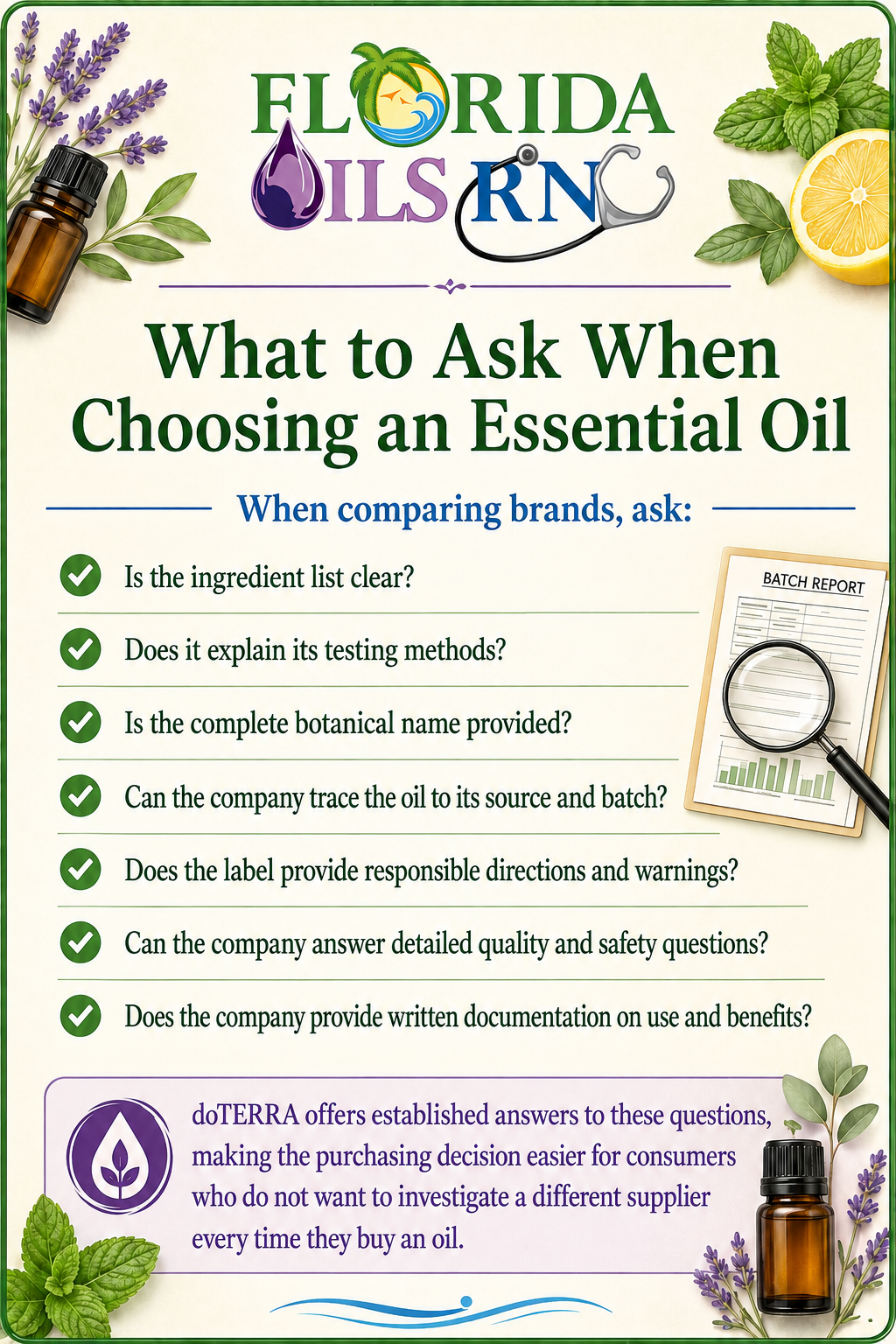
CLICK HERE TO DOWNLOAD AND PRINT THIS POSTER
“Natural” does not mean risk-free. Essential oils are highly concentrated plant products and can cause skin irritation, sensitization, eye injury, breathing discomfort, or other adverse reactions when used improperly. Some oils can increase sensitivity to sunlight, and certain products may be unsuitable for young children, pregnant or breastfeeding individuals, pets, or people with particular health conditions.
Consumers should follow the directions and cautions printed on each label. Topical use may require dilution with a carrier oil, and more oil is not necessarily better. Internal use should occur only when the specific product is labeled for that purpose and its directions are carefully followed. Anyone taking medication or managing a health condition should consult a qualified healthcare professional before use.
Could another brand also sell high-quality oils?
A responsible comparison should not claim that every non-doTERRA oil is inferior. Other companies may use ethical sourcing, qualified laboratories, batch testing, and appropriate labeling. The problem arises when an inexpensive or unknown product offers no meaningful evidence behind claims such as “therapeutic grade,” “all natural,” or “100% pure.”
What is the most important reason to choose doTERRA?
The central reason is confidence grounded in documentation. With doTERRA, consumers receive more than an appealing aroma: they receive an oil connected to a specified plant, a sourcing network, a multilayer testing protocol, a traceable quality number, detailed directions, and an established support system.
A generic product may initially cost less, but its value is difficult to judge when its botanical identity, composition, source, or testing history is unclear. Because essential oils are concentrated and may be inhaled or applied to the body, purchasing from a company with transparent quality controls is a sensible precaution. doTERRA’s sourcing, testing, traceability, and education provide consumers with concrete reasons to choose its products over oils selected primarily because they are inexpensive or readily available.