
Back-to-School Wellness: Simple Essential-Oil Routines for Kids
A personal message from Sheila Tucker
Back-to-school season always seems to arrive with a mixture of excitement and uncertainty. Children are adjusting to new teachers, classrooms, schedules, expectations, and friendships. Parents are organizing transportation, activities, meals, homework, and earlier bedtimes. Even when children are eager to return, the change in routine can leave the entire family feeling a little unsettled.
After raising seven children and spending years homeschooling, I understand that going back to school isn’t an adjustment only for the child. It can be an adjustment for the entire family.
The child is learning a new teacher, classroom, expectations, friendships, subjects, schedules, technology, and ways of doing things—but the parent is often learning a whole new system too.
We have to figure out the teacher’s expectations, homework system, apps and technology, transportation, extracurricular activities, meals, bedtime, morning routines, and then figure out how to help our child navigate all of it.
Sometimes supporting the child means supporting the parent, too.
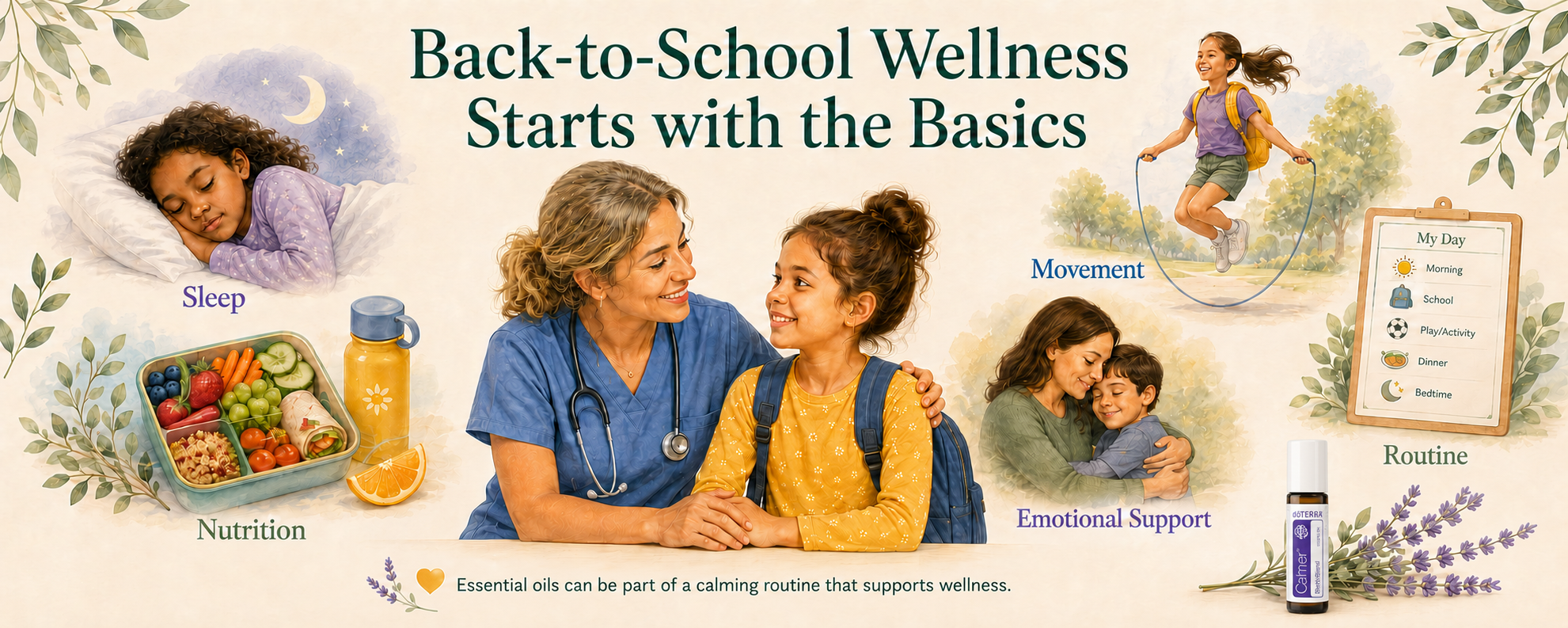
As a nurse and wellness advocate, I believe the most effective back-to-school wellness plan begins with the basics: adequate sleep, nutritious meals, regular movement, emotional support, and predictable routines. Essential oils do not replace these foundations, and they should never be used as substitutes for medical care. However, when used carefully and consistently, aromatic routines can become comforting signals that help children prepare for the different parts of their day.
Begin with a dependable morning routine
A calmer school morning usually begins the night before. Backpacks can be packed, clothes selected, lunches planned, and permission slips placed by the door. These small preparations reduce the number of decisions families must make when everyone is still waking up.
I also encourage parents to leave a few unhurried minutes for connection. A shared breakfast, a reassuring conversation, or a positive affirmation can help a child begin the day feeling supported.

Purchase Kids Collection at wholesale price - CLICK HERE
The doTERRA Kids Oil Collection includes several pre-diluted roll-on blends designed for use with children under adult supervision. Brave Courage Blend can be paired with a simple affirmation before a new school day, presentation, test, or unfamiliar activity. A child might say, “I can try something new,” or “I am ready to do my best,” while a parent applies the blend according to its label directions.
The aroma itself is not a guarantee that nervousness will disappear. Instead, the repeated combination of an aroma, a reassuring statement, and a caring adult can become part of a familiar transition ritual.
Create a cue for learning time
After-school homework can be difficult when children are hungry, tired, or mentally ready to play. Before beginning assignments, I recommend offering a nutritious snack, allowing time for movement, and creating a designated work area with limited distractions.
Purchase Thinker at wholesale price - CLICK HERE
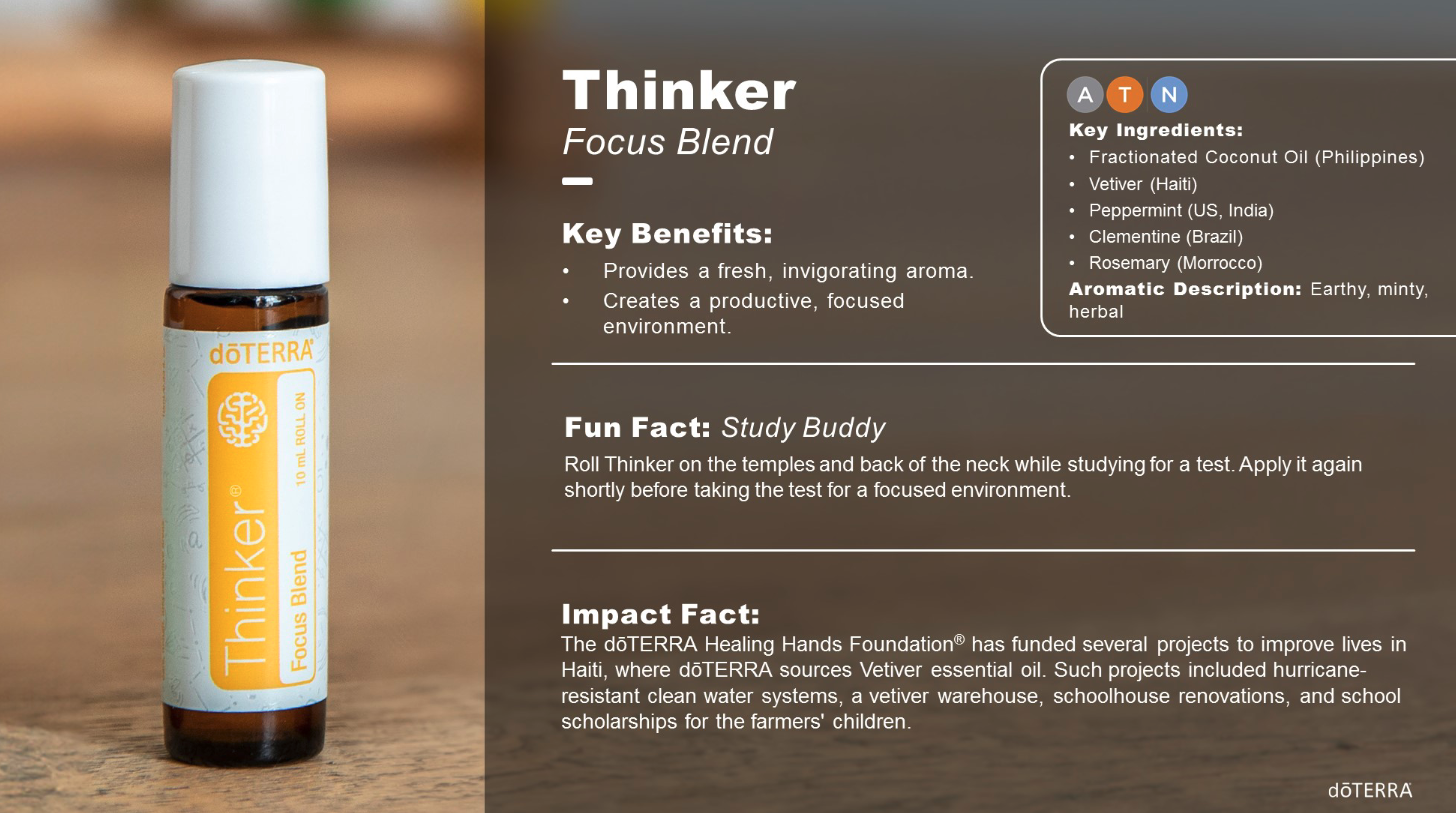
Thinker Focus Blend contains Vetiver, Peppermint, Clementine, and Rosemary essential oils in a base of Fractionated Coconut Oil. doTERRA recommends applying it to the wrists, hands, or pulse points for an uplifting aroma while studying. The company also states that it should be used with adult supervision and kept away from children younger than three (doTERRA, n.d.-b).
Thinker can become a sensory cue that says, “It is time to settle in and begin.” The most important support, however, remains a realistic homework plan. Breaking an assignment into shorter sections, taking movement breaks, and recognizing effort can do much more for a child than expecting an aroma to produce concentration on its own.
Before sending any essential-oil product in a backpack, parents should review the school’s rules. Some schools may prohibit fragrances or require that personal-care products remain in the nurse’s office. Classmates and staff members may also have asthma, allergies, migraines, or fragrance sensitivities. Using an oil at home may therefore be more appropriate than applying it at school.
Make room for emotional transitions
Children do not always explain school stress directly. It may appear as irritability, tears, stomach complaints, difficulty sleeping, or resistance to attending school. A predictable after-school check-in gives children an opportunity to talk without feeling interrogated.
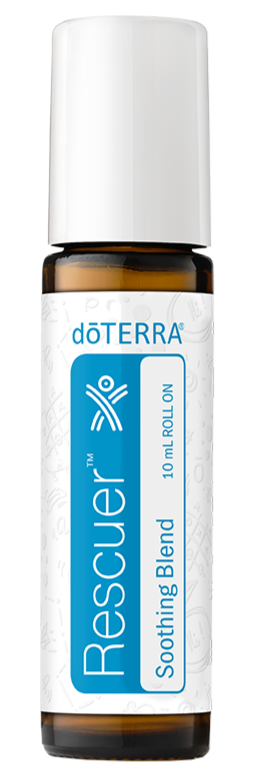
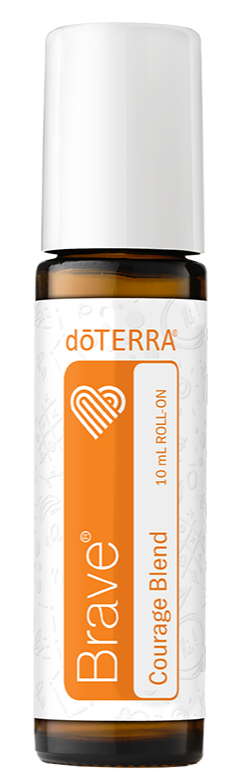
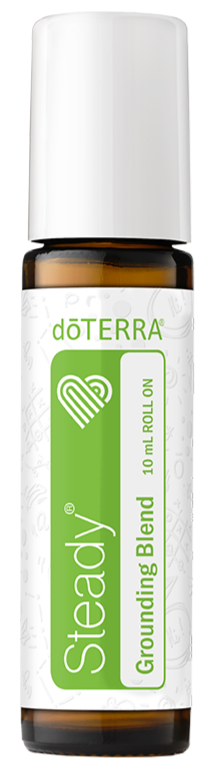
Steady may be incorporated into a quiet breathing routine when a child feels overwhelmed. A parent might apply it according to the label, sit with the child, and guide several slow breaths. Brave may be used before a challenging activity, while Rescuer can provide a comforting topical sensation after sports or an active day.
These products should support connection—not replace it. If a child’s fear, sadness, physical symptoms, sleep difficulty, or school avoidance persists, parents should consult the child’s pediatrician or another qualified professional.
Protect the bedtime routine
Sleep is one of the most important parts of back-to-school wellness. The Centers for Disease Control and Prevention reports that children ages 6–12 generally need 9–12 hours of sleep each day, while teenagers ages 13–18 need 8–10 hours. Adequate sleep supports health, attention, concentration, and academic performance (Centers for Disease Control and Prevention, 2024).
I recommend beginning the school-year sleep schedule before the first day whenever possible. Move bedtime gradually, dim the lights, reduce stimulating activities, and keep the routine consistent. A bath, pajamas, a quiet conversation, reading, and lights out can help the body recognize that the day is ending.
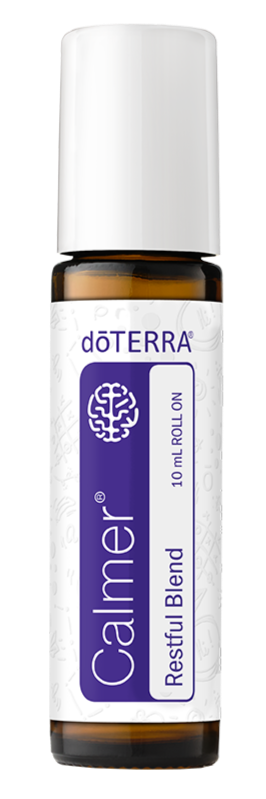
Calmer contains Lavender, Cananga, Buddha Wood, and Roman Chamomile essential oils with Fractionated Coconut Oil. doTERRA suggests applying it to areas such as the feet, wrists, or back of the neck to create a calming bedtime atmosphere (doTERRA, n.d.-a). Calmer can be one element of a bedtime ritual, but it should not be described as a treatment for insomnia or another sleep disorder. Research on aromatherapy and sleep is promising but still limited, and larger, more rigorous studies are needed (National Center for Complementary and Integrative Health, 2024).
Use essential oils responsibly
Natural does not automatically mean risk-free. Essential oils are concentrated substances, and children may be more vulnerable to adverse effects than adults. The American Academy of Pediatrics advises that undiluted essential oils can irritate the skin and emphasizes that pediatric health information should not replace individualized advice from a child’s doctor (Kemper, 2025).
When using essential oils around children:
Follow the directions and cautions on the individual product label.
Use children’s products only with responsible adult supervision.
Do not allow a child to swallow an essential oil unless a qualified healthcare professional has specifically directed its use.
Keep oils away from the eyes, inner ears, mouth, and sensitive or damaged skin.
Stop using the product if redness, irritation, or another adverse reaction occurs. Seek immediate medical attention for breathing difficulty or signs of a severe allergic reaction.
Ask a pediatrician before use if the child has asthma, allergies, epilepsy, a chronic condition, or takes medication.
Store every bottle securely, out of children’s sight and reach.
Poison Control warns that essential oils can cause poisoning when misused and recommends locking them away from children and pets. If an essential oil is swallowed, contact Poison Control immediately at 1-800-222-1222 or use the webPOISONCONTROL tool for guidance (National Capital Poison Center, n.d.).
A healthy year begins with small routines
Back-to-school wellness does not require a complicated plan. Children benefit from consistent sleep, nourishing food, physical activity, manageable schedules, and adults who listen. doTERRA’s Kids Oil Collection can complement those practices by adding pleasant aromas to morning affirmations, study preparation, after-school transitions, and bedtime routines.
After raising seven children and spending years homeschooling, I understand that back-to-school season isn’t an adjustment only for the child—it is an adjustment for the entire family.
Every new school year brings a new rhythm. Children are learning new teachers, expectations, schedules, friendships, subjects, and ways of doing things. At the same time, parents are learning right alongside them. We are figuring out new schedules, homework systems, technology, transportation, activities, teachers’ expectations, and how to support what our children are being asked to learn.
That can become overwhelming for everyone.
As both a mother and a nurse, one of the things I learned over the years was the value of creating simple, predictable routines around my children. Sometimes what a child needs most isn’t another demand to ‘focus’ or ‘calm down,’ but an environment that helps them transition from one state into another—waking up, preparing for school, settling down to learn, decompressing afterward, and eventually preparing for sleep.
That is one of the reasons essential oils became useful tools in our family’s wellness routines. Aroma can become part of a familiar sensory ritual: Peppermint before focused work, a citrus aroma as part of an uplifting morning routine, or a gentler calming aroma as the day winds down. The oil isn’t doing the parenting, teaching, or learning for us. It becomes one small piece of an environment we intentionally create around our children.
Our goal as parents isn’t to create perfect students. It is to help our children feel supported while they develop the skills to navigate increasingly complicated lives. And while our children are learning their new systems, we as parents are learning new systems too.
A calmer morning, a familiar aroma, breakfast together, a few encouraging words before a test, movement before homework, or a predictable bedtime ritual may seem like small things. But those small, repeated moments can become part of the structure that tells a child: You are supported. We can figure this out together.
After raising my own family, that is the kind of back-to-school wellness I believe in—not perfection, but connection, consistency, support, and practical tools that help the entire family find its rhythm.
All my best,
—Sheila Tucker
References
Centers for Disease Control and Prevention. (2024, July 2). Sleep and health. https://www.cdc.gov/physical-activity-education/staying-healthy/sleep.html
doTERRA. (n.d.-a). Kids Oil Collection. https://www.doterra.com/US/en/p/kids-collection
doTERRA. (n.d.-b). Thinker Oil. https://www.doterra.com/US/en/doterra-thinker-blend
Kemper, K. (2025, August 8). Aromatherapy for children. HealthyChildren.org, American Academy of Pediatrics. https://www.healthychildren.org/English/health-issues/conditions/treatments/Pages/Aromatherapy.aspx
National Capital Poison Center. (n.d.). Essential oils: Poisonous when misused. Poison Control. https://www.poison.org/articles/essential-oils
National Center for Complementary and Integrative Health. (2024). Sleep disorders and complementary health approaches: Usefulness and safety. https://www.nccih.nih.gov/health/sleep-disorders-and-complementary-health-approaches